The Invisible Extinction. Credit: 2022 Microbe Media LLC THRiVE lab co-director, Dr. Meghan Azad will be participating as a panelists for February 28 screening of a new documentary titled "The Invisible Extinction: The impact of a disappearing Microbiota" in New York City. The screening is part of Columbia University Epidemiology Grand Rounds - a special series of seminars showcasing cutting-edge research between different entities, academic institutions, faculties and the Columbia community at large. View the movie here.
 Cohort Profile Article. Credits: Epidemiology & Health THRiVE Lab members and colleagues published "Cohort Profile: Investigating SARS-CoV-2 infection and the health and psychosocial impact of the COVID-19 pandemic in the Canadian CHILD Cohort" in Epidemiology and Health. Embedded in the CHILD Cohort, this study collected data from 1462 families to understand how the COVID-19 pandemic impacted the health and well-being of children and parents, including aspects related to infection, testing, vaccination, lifestyle changes and school closures. The study was led by THRiVE co-director, Dr. Meghan Azad, and offers a unique data resource for the research community in Canada and abroad. Read the full article here [PDF] and check out Dr. Azad's [Tweetorial] on X.
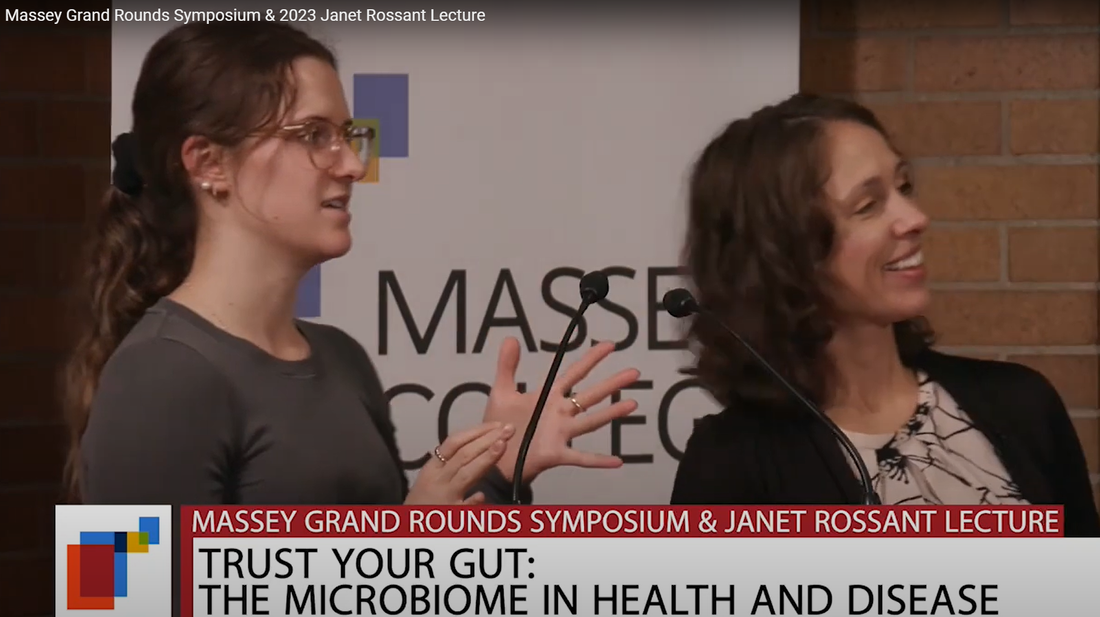 Moderator with Meghan Azad. Credit: Massey Grand Rounds THRiVE Lab co-director, Dr. Meghan Azad, was featured on the Massey Grand Rounds Annual Symposium titled "Trust you Gut: The Microbiome in Health & Disease" in 2023. Dr. Azad was awarded the Jannet Rossant Lectureship and spoke about "Modelling Milk & Microbes: new approaches to understanding how breastfeeding supports the infant microbiome and lifelong health". View the full symposium here.
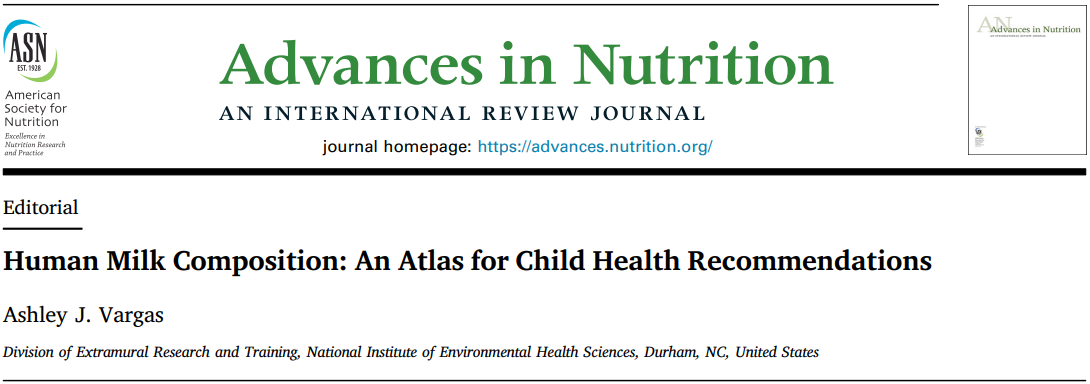 Recent THRiVE lab research is being recognized internationally: led by THRiVE Co-Director Meghan Azad, the IMiC Consortium published a large systematic review “Human Milk Composition and Child Growth and Body Composition in the First 2 Years: A Systematic Review". The work was featured by the American Society for Nutrition and highlighted by Dr. Ashley Vargas of the US National Institutes of Health in a commentary "Human Milk Composition: An Atlas Child for Child Health Recommendations". Follow the links to read more!
New Paper Series: Human Milk Composition and Child Growth and Body Composition in the First 2 years.12/6/2023
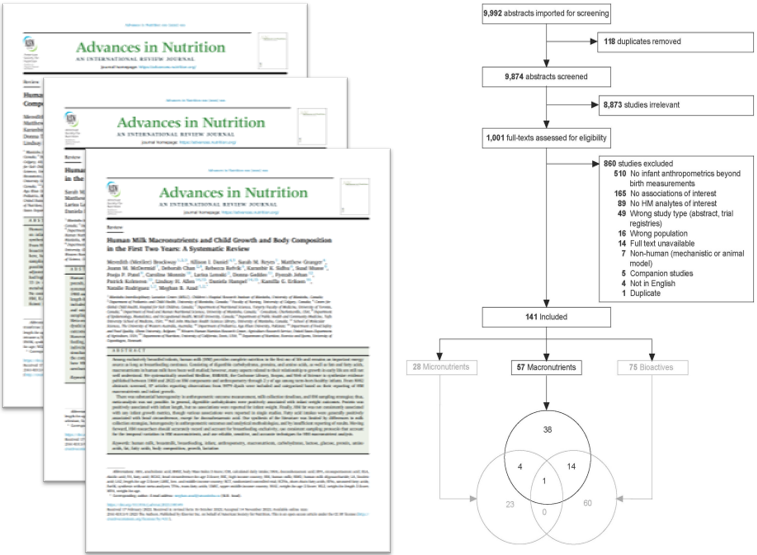 THRiVE lab members have published a large systematic review involving over 25 authors who screened nearly 10,000 papers about human milk and child growth. Published in Advances in Nutrition, the project “Human Milk Composition and Child Growth and Body Composition in the First 2 Years: A Systematic Review” explores current evidence to help us better understand the link between human milk components and child growth from birth to age 2 years. Due to the large number of research studies in this area, results have been organized into three manuscripts dedicated to (1) human milk macronutrients, (2) human milk micronutrients, and (3) human milk biologically active (bioactive) components. This study was led by THRiVE Co-Director Dr. Meghan Azad together with former THRiVE postdoctoral fellows Dr. Merilee Brockway and Dr. Sarah Reyes. Read the full series here: Bioactive Components [PDF], Micronutrients [PDF], and Macronutrients [PDF].
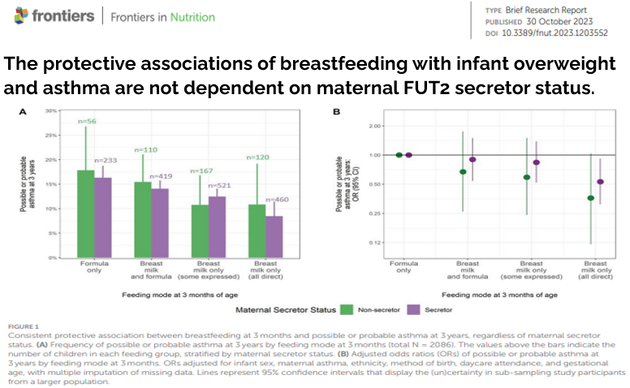 THRiVE Lab members published "The Protective associations of breastfeeding with infant overweight and asthma are not dependent on maternal FUT2 secretor status" in Frontiers in Nutrition. This article follows up on previous THRiVE research to address the question: is breastmilk from non-secretors (a genetic trait carried by ~20% of people) inferior to secretor milk? By re-analyzing data showing beneficial associations between breastfeeding and infant growth as well as childhood asthma, the new study demonstrates that these relationships persist regardless of maternal secretor status. The findings suggest that secretor and non-secretor mothers can equally promote respiratory health and infant growth through breastfeeding. The study was led by THRiVE co-director, Dr. Meghan Azad together with lab members Dr. Melissa Manus and Stephanie Goguen. Read the full article [PDF] and check out Dr. Azad's [Tweetorial] on Twitter.
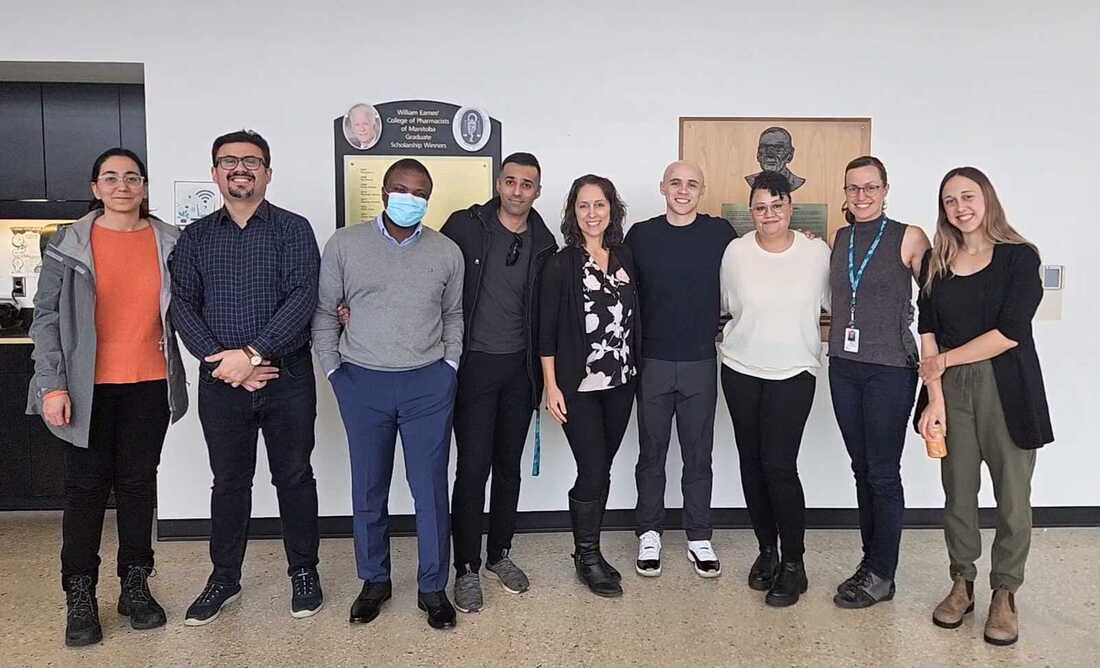 (Left to Right) Narges Khodabandehloo, Dr. Payam Peymani, Rilwan Azeez, Affan A. Sher, Dr. Meghan Azad, Spencer Ames, Natalie Rodriguez, Dr. Larisa Lotoski and Sarah Turner Big congratulations to Spencer Ames, an MSc student in the THRiVE lab, for successfully defending his thesis about "Investigating the relationship between infant feeding practices and inflammation-associated biomarkers of one-year-old infants in the CHILD cohort study". It's been great to see Spencer's growth and success as a researcher in the THRiVE Discovery Lab. We're thankful for all he's contributed to the lab and wish him the very best in his future endeavors!
MILC Club Members expressed their thoughts on breastfeeding to support World Breastfeeding Week 2023 (#WBW2023). This annual celebration takes place from August 1 to 7 each year since 1992, commemorating the 1990 Innocenti Declaration. Discover ways to #ProtectBreastfeeding by visiting worldbreastfeedingweek.org.
THRiVE Discovery Lab leads breast milk analysis for new 10,000-family birth cohort in the UK7/24/2023
 Credits: https://preventchildabuse.org/ THRiVE lab and MILC co-director, Meghan Azad and Natalie Rodriguez, are spearheading the breast milk component of the pioneering Children Growing Up in Liverpool (C-GULL) study, supported by the Welcome Trust's Discovery Research and Mental Health programs. C-GULL marks a significant milestone as the UK's first biomedical birth cohort study in 17 years. Under the leadership of Professor Louise Kenny and her team at the University of Liverpool, the C-GULL study will closely monitor the well-being of 10,000 first-born babies and their families in Liverpool, from the early stages of pregnancy into adulthood. Researchers will collect comprehensive data on various health aspects, social circumstances, and environmental exposures. To enhance data accuracy, the study will use innovative health technologies, including wearable devices and mobile applications, to track real-time health indicators.
Within this transformative project, Dr. Meghan Azad and colleagues assume a pivotal role in analyzing breast milk samples to shed light on the intricate relationships between childhood experiences, breast milk composition, and long-term health outcomes. Dr. Azad's expertise and leadership bring invaluable insights into this crucial aspect of the study. Read more here!  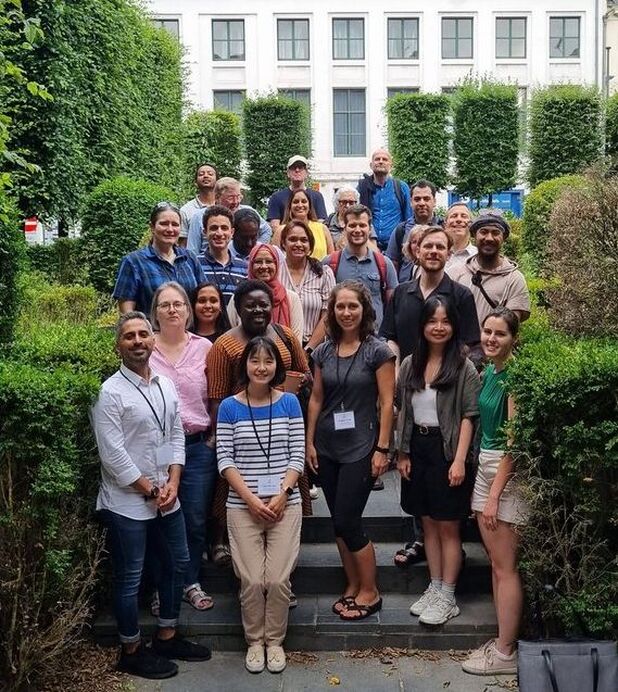 Credits: https://twitter.com/MeghanAzad The IMiC Consortium, co-directed by Meghan Azad & Natalie Rodriguez, held its first in-person meeting from June 18-20, 2023, in Ghent, Belgium. After 3 years of virtual collaboration, researcher finally convened for three impactful days of brainstorming and knowledge exchange. The Yalo Boutique Hotel and Het Pand served as venues for a hackathon, discussions, and presentations, bring researchers closer to unraveling the secretes of breastmilk. Universiteit Gent graciously hosted the event, which marked a significant step forward in understanding complexities of breastmilk. With renewed enthusiasm, the consortium eagerly awaits the groundbreaking results to emerge from this collaborative effort. Stay tuned for more updates from IMiC as they continue their pioneering research in the field of breastmilk!
|
Photos from wuestenigel, rabello_